
*As seen in North Canton Living Magazine February 2025
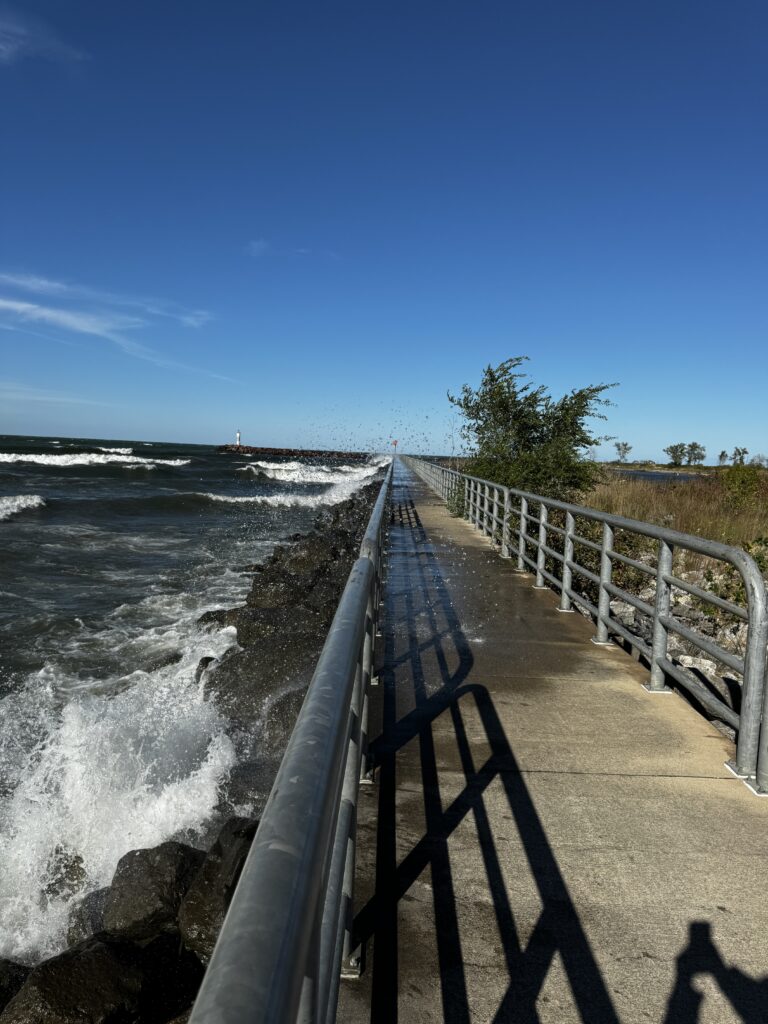
The waves crashed against the pier with spray arching over the walk. The sky bright blue after several days of storms. In the distance, I could see Chicago across Lake Michigan seeming to float on the green water. Alone on the beach and perched on a log, I savored the quiet moment of late fall sunshine. Turning my face to the sun, I saw the beach surrounded by a strange mix of million-dollar houses and steel plants.
Indiana Dunes National Park is located only 30 miles east of Chicago. Known for its living sand dunes and bird sanctuary, Indiana Dunes is a surprising oasis among expensive homes and industry tucked into the dense forests along Lake Michigan. Mt. Baldy is a 120-foot sand dune that formed more than 4,000 years ago. This living dune moves about eleven feet per year. I could see the trees and shrubs it has consumed with their tops visibly poking out of the dune.
The Great Marsh is known for its world-class birding. The marsh is a central stopping point for migratory birds making the long trip between Canada and Mexico. The park’s biodiversity supports birds, insects, and rare flowers. This wetland ecosystem is a birder’s paradise. The handicapped trail is perfect for a stroll – just bring your binoculars.
I camped at Dunewood Campground approximately two miles from the beach. With quick access to the highway, the campground is centrally located in the park. The spots were well-manicured and included showers and flush toilets. Groceries and restaurants are a quick drive to nearby Michigan City.
I parked along the narrow road edging close to the steep hill. Along the road are five homes featured in the 1933 Century of Progress World’s Fair. A large pink stucco; circular glass home; cement castle and more are a short walk along the road. Each was designed to inspire the public a hundred years ago. Only open once a year, the Century of Progress homes were moved to a location along the lake to be cared for by the historical society.
What I Learned
In 2019, Indiana Dune National Lakeshore became Indiana Dunes National Park.
Indigenous peoples inhabited the area with evidence dating back more than 10,000 years.
Over 350 bird species have been documented in the park.
Every year thousands of scientists descend on the park to document the migratory paths of paths of birds helping fuel a $75 billion bird-watching industry.
The Jack Pine Tree is unique to Indiana Dunes and it’s species is mostly found in the far north. The Jack Pine has adapted to the warmer climate of the park.
When You Go
Indiana Dunes National Park and State Park require a pass. Day passes are available for the state park. The different types of national park passes can be found at nps.gov. I have an all-access pass that was free for application due to my disability and handicapped requirements.
Hotels, Airbnb as well as chain and local restaurants abound in the area. Close to I-80, the park is an urban oasis close to civilization. My cell coverage was excellent yet it was quiet within the park.
There is a busy railroad within the park that also provides daily train rides into Chicago. For a nominal fee, you can ride into Chicago for a day while staying in a more reasonably priced suburb.
These are not ocean beaches. They are narrow and tucked into the lake shore. I was there in late fall yet the traffic was quite busy. The summer can be gridlock. The town of Beverly Shores only allows beachside parking for residents and fines are expensive. If you go for the beach, plan on arriving early and scout your parking situation in advance. There are very few parking spots. Many people pay the daily entrance fee to the state park and access the beach there.
Bring your bikes and kayaks to enjoy the miles of available trails.
Weather is changeable. Plan accordingly.